Prevent diabetes with daily monitoring: India guide 2026
- Seht Health Team

- Mar 13
- 5 min read
Updated: Apr 5

You can prevent diabetes with daily monitoring and the evidence for this is unambiguous. Regular blood sugar tracking gives you real-time feedback on exactly which foods, meals, and lifestyle habits are moving you toward diabetes or away from it. For the 77 million Indians currently in the prediabetes zone, this feedback loop is the difference between reversing the condition and progressing to full type 2 diabetes.
For a complete guide to living with and managing diabetes once diagnosed, read: managing diabetes in India (https://www.seht.in/post/managing-diabetes-control-blood-sugar-india)
What you'll learn: • What blood sugar levels to check and when • Normal glucometer reading ranges for Indians at risk • The 5-minute daily monitoring routine that catches early warning signs • Which specific habits move your numbers in the right direction • How to store and use your monitoring data effectively |
Why daily monitoring is your best diabetes prevention tool
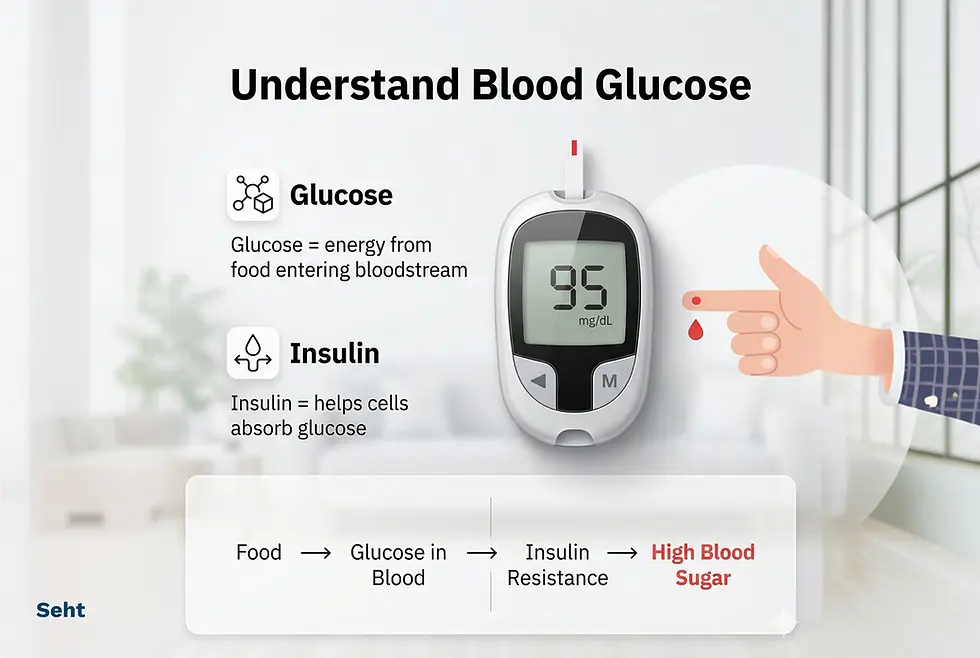
Most Indians discover they have diabetes at a routine health checkup often years after their blood sugar first started rising silently. Daily blood glucose monitoring closes this gap. When you check your blood sugar regularly, you are not waiting for damage to accumulate you are reading your body's daily signal and responding in real time.
The monitoring advantage: feedback that changes behaviour
When Indians prevent diabetes with daily monitoring consistently, they discover that specific behaviours eating white rice for lunch, missing a walk, sleeping less than 6 hours produce a measurable spike in their blood sugar reading. That number on the glucometer is more persuasive than any doctor's advice, because it is personal and immediate. A 2023 study from the Indian Journal of Endocrinology found that prediabetic individuals who monitored blood sugar at home achieved HbA1c reductions comparable to those achieved with metformin alone.
What to monitor and when: the complete daily schedule

Morning fasting reading (the anchor measurement)
Check blood glucose every morning before eating, drinking (except water), or taking medications. This is your baseline. Target for diabetes prevention: Fasting blood glucose consistently below 100 mg/dL is normal. Readings between 100–125 mg/dL repeatedly indicate prediabetes the zone where prevention works most powerfully.
Post-meal reading (the most actionable data point)
Check blood glucose exactly 2 hours after the first bite of a meal. Target: Below 140 mg/dL at 2 hours is ideal for prevention. Between 140–199 mg/dL repeatedly indicates prediabetic glucose tolerance. Above 200 mg/dL requires medical consultation.
Weekly review pattern
Day | Morning fasting | Post-meal (2hr) | Notes |
Monday | Check | After lunch | Baseline week start |
Wednesday | Check | After dinner | Check evening meal impact |
Friday | Check | After breakfast | Check morning meal impact |
Weekend | Check | After largest meal | Observe weekend eating pattern |
Glucometer normal range for Indians: what your numbers actually mean
Blood glucose reading | What it means | What to do |
Fasting: below 100 mg/dL | Normal range | Maintain habits, monitor monthly |
Fasting: 100–125 mg/dL | Prediabetes range | Increase frequency, see doctor, start lifestyle changes immediately |
Fasting: above 126 mg/dL (twice) | Diabetes threshold | Confirm with lab test, consult doctor urgently |
Post-meal (2hr): below 140 mg/dL | Normal | Good response to that meal |
Post-meal (2hr): 140–199 mg/dL | Impaired glucose tolerance | Modify meal, increase exercise, monitor trend |
Post-meal (2hr): above 200 mg/dL | Diabetes range | Confirm with lab, medical consultation needed |
In simple terms: Think of your blood glucose readings like a daily report card on your metabolic health. A fasting reading under 100 is an A. Between 100–125 is a warning not a failure, but an urgent message to act. Above 125 on multiple mornings means you need to see a doctor this week, not next month. |
The 5 daily habits that move your numbers in the right direction

Habit 1: The post-meal walk
A 15–20 minute walk within 30 minutes of finishing a meal can reduce post-meal blood glucose by 20–30 mg/dL compared to sitting. This is one of the most powerful and accessible blood sugar management tools available to any Indian it requires no equipment, no gym, no special diet.
Habit 2: Reduce liquid sugar first
Sugary beverages sweetened tea consumed 3 times a day, fruit juices, soft drinks are the single most impactful dietary change for daily blood sugar monitoring improvement. Switching to plain water or cutting 1 teaspoon of sugar from chai produces visible glucometer improvements within 1–2 weeks.
Habit 3: Eat vegetables before carbohydrates
Eating a serving of salad or cooked sabzi before the carbohydrate portion of a meal reduces post-meal blood sugar by slowing glucose absorption. This simple reordering —H vegetables first, then dal, then rice or roti requires no dietary restriction, only resequencing.
Habit 4: 7–8 hours of sleep
A single night of poor sleep under 6 hours measurably reduces insulin sensitivity the following day. Chronic sleep deprivation is now established as an independent risk factor for type 2 diabetes. The most underestimated diabetes prevention lifestyle India tool.
Habit 5: Weekly weight check
For Indians with prediabetes, every 1 kg of weight lost specifically belly fat produces a measurable improvement in insulin sensitivity. Monitoring weight weekly creates accountability that complements blood glucose monitoring.
Choosing and using a glucometer in India
Brand | Model | Accuracy | Device cost | Strip cost |
OneTouch | Verio / Select Plus | High (ISO 15197:2013) | ₹800–₹1,500 | ₹15–₹18 |
Accu-Chek | Active / Instant | High | ₹700–₹1,200 | ₹12–₹16 |
Dr. Morepen | BG-03 | Moderate | ₹300–₹500 | ₹8–₹12 |
Contour | Plus One | High | ₹1,200–₹1,800 | ₹14–₹18 |
Budget reality: The cheapest certified option at ₹300–₹500 device + ₹8–₹12 per strip is adequate for prevention monitoring. Testing 7–8 times per week costs approximately ₹350–₹400 per month less than a single restaurant meal.
When to see a doctor
Fasting readings consistently above 110 mg/dL over 2 weeks despite lifestyle changes
Post-meal readings consistently above 160 mg/dL
Unusual fatigue, excessive thirst, or frequent urination alongside elevated readings
A family member has been recently diagnosed with type 2 diabetes family history significantly elevates your risk
FAQs
Can monitoring blood sugar daily actually prevent diabetes?
Yes not the monitoring itself, but the behaviour change it drives. Daily monitoring shows you in real time which foods, activities, and habits raise your blood sugar. People who monitor consistently and respond with lifestyle adjustments achieve meaningful HbA1c reductions, often enough to prevent progression from prediabetes to type 2 diabetes.
What is a normal blood sugar reading for an Indian with prediabetes?
Target fasting blood glucose below 100 mg/dL and post-meal (2-hour) blood glucose below 140 mg/dL. Readings consistently in the prediabetes range (fasting 100–125, post-meal 140–199) signal that lifestyle intervention is needed but the condition has not yet progressed to diabetes.
How often should I check blood sugar for diabetes prevention?
For prevention, checking fasting blood glucose 4–5 mornings per week and post-meal readings 3–4 times per week provides sufficient data to identify trends. This is less frequent than active diabetes management monitoring, making it sustainable long-term.
What is the best time to check blood sugar for diabetes prevention?
The two most valuable times are: first thing in the morning before eating (fasting) and exactly 2 hours after your largest daily meal (post-meal). These two readings together give the clearest picture of baseline glucose metabolism and meal-specific response.
Is home blood glucose monitoring accurate enough for prevention?
ISO 15197:2013 certified glucometers are accurate within ±15 mg/dL of laboratory values sufficient for trend monitoring. Confirm persistently abnormal readings with a laboratory test before making medical decisions. Home monitoring is a guidance tool, not a diagnostic replacement.
Download Seht — free on iOS and Android
Every blood glucose reading tells a story but only when you can see the pattern over days and weeks. The Seht app lets you log readings, flag abnormal values, and store your complete glucose history alongside your prescriptions and lab reports.
Download free:


Sources and references
ICMR — India Diabetes Prevention Programme findings. https://icmr.gov.in
WHO — Prevention of type 2 diabetes information sheet. https://who.int
Indian Journal of Endocrinology and Metabolism — Home blood glucose monitoring in prediabetic patients.


Comments