HIIT vs yoga for Indians: what's right at 20s, 40s, and 60s

Updated: Apr 30
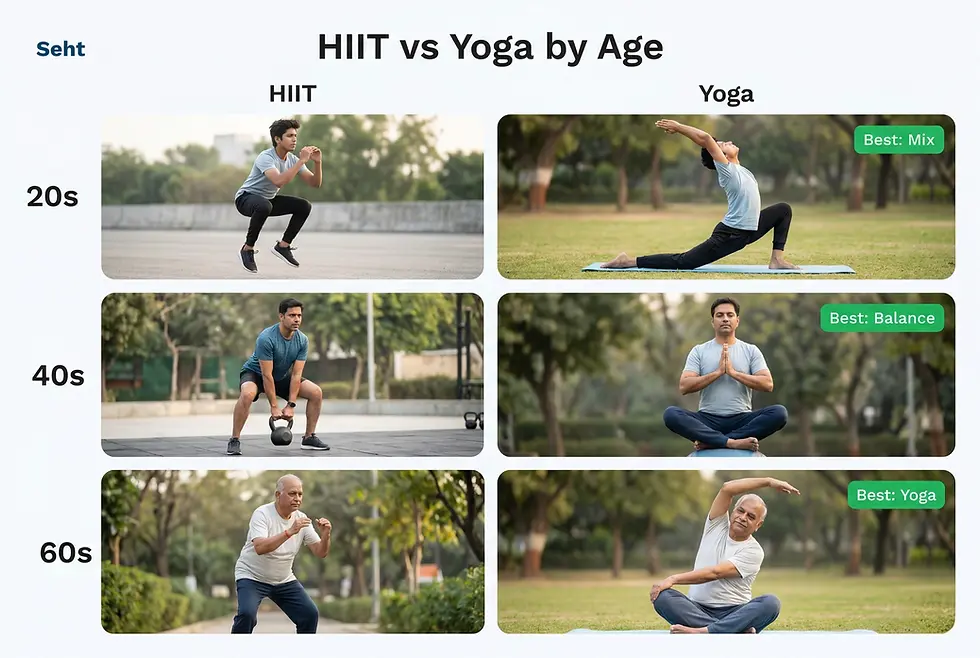
When comparing HIIT vs yoga for Indians by age, the answer is not one or the other it is which combination is right for your decade. HIIT (High-Intensity Interval Training) builds cardiovascular power and burns fat efficiently in under 30 minutes. Yoga builds flexibility, reduces stress, improves respiratory function, and is safe at every age. The best fitness plan for most Indian adults combines both with the balance shifting as you age. Here's the age-specific breakdown.
For the complete family fitness framework, read: The family that exercise together, stays healthy together
What you'll learn: • The real difference between HIIT and yoga in terms of health benefits • Which is more appropriate for your 20s, 40s, and 60s • How to combine both for maximum benefit at any age • The specific risks of HIIT that Indians must know before starting • Which option is right for your fitness goals this year |
What is HIIT and what is yoga the honest comparison
HIIT: High-Intensity Interval Training
HIIT involves alternating between short bursts of near-maximum effort (20–40 seconds) and brief recovery periods (10–20 seconds). A typical HIIT session lasts 15–25 minutes. The most common HIIT formats in India: Tabata (20 seconds on, 10 seconds off), circuit training (sequential bodyweight exercises), and sprint intervals. HIIT primarily benefits cardiovascular fitness, fat oxidation, insulin sensitivity, and metabolic rate. According to the American College of Sports Medicine (ACSM) 2024, HIIT achieves equivalent cardiovascular benefit to 50 minutes of moderate exercise in 25 minutes making it the most time-efficient exercise modality available.
Yoga: India's indigenous fitness system
Yoga combines asana (physical postures), pranayama (breathing exercises), and in many traditions, meditation. Modern hatha yoga and vinyasa yoga are the most widely practiced forms in urban India. Yoga primarily benefits flexibility, balance, core strength, stress hormone regulation (cortisol and adrenaline), respiratory function, and chronic pain management. A PMC-published randomized controlled trial showed that 8 weeks of yoga significantly improved respiratory function and cardiovascular fitness in middle-aged subjects. Yoga is unique in being genuinely beneficial at every age from 10 to 90 with appropriate modification.
Comparison point | HIIT | Yoga |
Primary benefit | Cardiovascular fitness + fat burning | Flexibility + stress reduction + respiratory health |
Session duration | 15–25 minutes | 20–60 minutes |
Calorie burn (30 mins) | 300–500 calories (high intensity) | 150–300 calories (moderate) |
Joint impact | High not safe with knee/hip injuries | Low safe with most joint conditions |
Minimum fitness required | Moderate need to tolerate high intensity | None suitable for complete beginners |
Cardiovascular benefit | Very high improves VO2 max significantly | Moderate improves resting heart rate and BP |
Stress reduction | Moderate releases endorphins | Very high directly reduces cortisol |
Age suitability | Best in 20s–40s; modified for 50s+ | Suitable at all ages with modifications |
Equipment needed | None required for bodyweight HIIT | Yoga mat (₹500–₹2,000) |
Risk of injury | Higher especially for beginners | Lower especially in chair or gentle yoga |
In simple terms: HIIT is like sprinting it gets you to peak fitness faster but is harder on the body and unsuitable for injured or older joints. Yoga is like a long walk gentler, sustainable at any age, and uniquely powerful for stress, breathing, and flexibility. Most Indians do best with both: HIIT twice a week in their 20s and 30s, shifting toward more yoga as they move into their 40s and 50s. |
HIIT vs yoga in your 20s: building the foundation
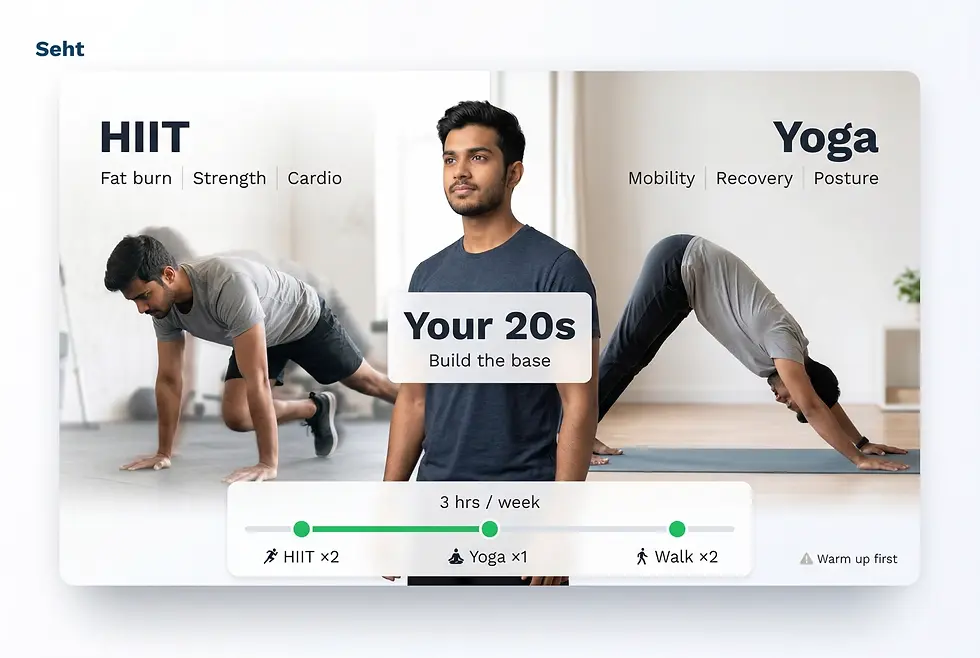
In your 20s, you have the cardiovascular capacity and musculoskeletal resilience to maximize HIIT benefits. The priorities in your 20s are building cardiovascular base, burning fat efficiently, and developing muscle mass all areas where HIIT excels.
HIIT recommendation: 2–3 sessions per week, 20–25 minutes each. Bodyweight-only for first 6 weeks (squats, jumping jacks, burpees, mountain climbers), then add weights or resistance bands.
Yoga recommendation: 1–2 sessions per week, 30 minutes each. Vinyasa or hatha yoga is ideal. Focus on hip-opening poses and shoulder mobility to offset desk posture damage.
The winning combination: 2 HIIT sessions + 1 yoga session + 2 walks per week covers all fitness needs in approximately 3 hours total. This is the most evidence-backed fitness minimum for an Indian 20-something professional.
Beware: Indian professionals in their 20s are frequently sedentary for 10+ hours daily, then attempt 45-minute HIIT sessions without preparation. This is the profile most likely to cause injury. Always complete a 10-minute dynamic warm-up before HIIT.
HIIT vs yoga in your 40s: shifting the balance
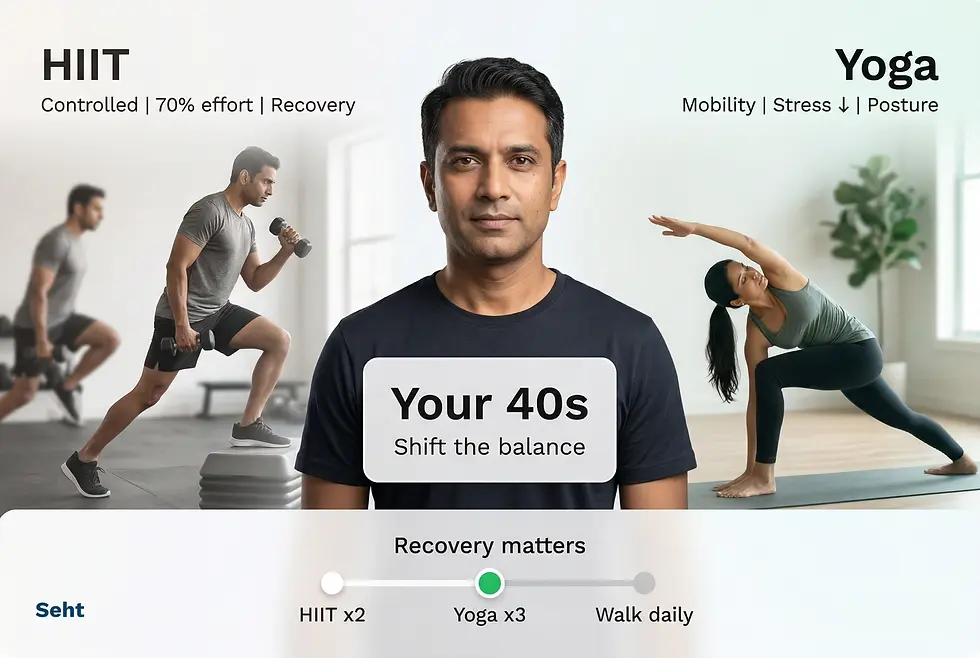
In your 40s, the calculation changes significantly. HIIT remains beneficial and should not be abandoned entirely but the proportion shifts toward yoga and moderate-intensity continuous exercise. The specific changes in the 40s that affect this:
Musculoskeletal recovery time increases: HIIT-induced muscle soreness that took 24 hours to resolve in your 20s takes 48–72 hours in your 40s. This means HIIT sessions should be spaced further apart maximum 2 per week, with 48 hours minimum between sessions.
Cortisol management becomes critical: HIIT is a significant cortisol-generating exercise. In a decade already characterized by high career-related cortisol levels, excessive HIIT can worsen stress hormones. Yoga directly opposes this reducing both cortisol and resting heart rate.
Blood pressure considerations: If you have developed Stage 1 hypertension in your 40s (very common in Indian adults), yoga is directly therapeutic reducing systolic BP by 5–10 mmHg in Indian clinical trials. HIIT must be approved by your doctor if BP is above 140/90 mmHg.
Flexibility and mobility protection: Joint and disc health requires consistent flexibility work in the 40s to prevent the injuries that become chronic in the 50s. A 30-minute yoga session 3 times weekly is now medically indicated, not optional.
Recommended 40s prescription: 2 HIIT sessions (lower intensity than 20s- 70% maximum effort rather than 90%) + 3 yoga or Pilates sessions per week + daily walking.
HIIT vs yoga in your 60s: yoga wins
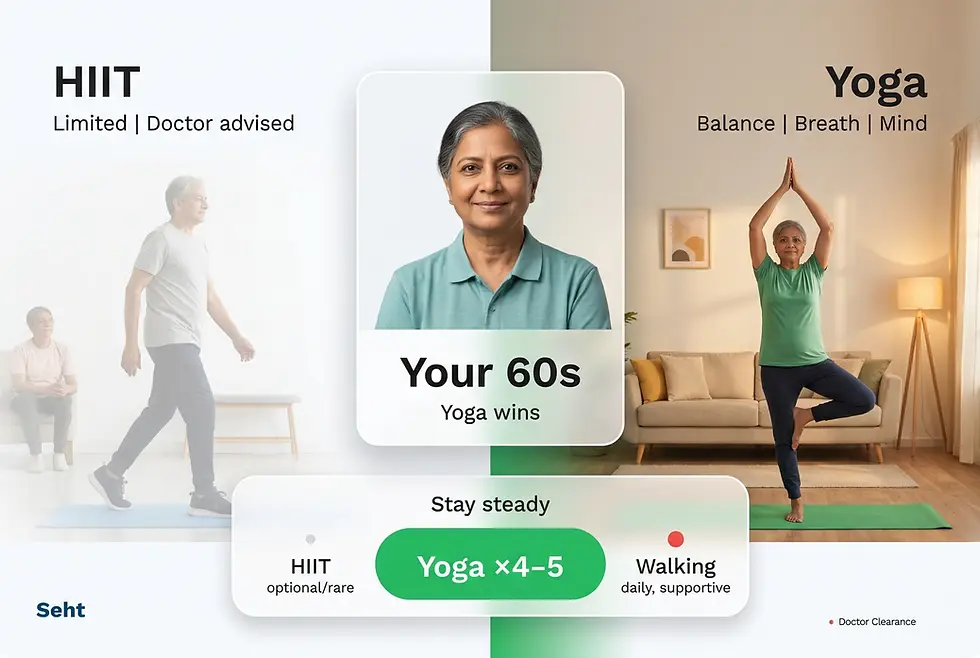
By your 60s, high-intensity training is no longer appropriate for most Indian adults without specific cardiological clearance. The risks cardiac arrhythmias during peak intensity, joint injuries in deconditioned connective tissue, and hypoglycaemia in diabetic patients generally outweigh the benefits for the majority of Indians in their 60s. Yoga, by contrast, has an excellent safety profile for Indians in their 60s and specifically addresses the health priorities of this decade.
Fall prevention: Yoga's balance-building elements tree pose, warrior sequences, single-leg standing directly reduce the risk of falls, which are the leading cause of injury-related hospitalization and death in Indians above 65.
Respiratory health: Pranayama improves lung capacity specifically in elderly subjects, as shown in multiple Indian randomized controlled trials. This directly benefits the 15% of Indians above 60 who have COPD.
Blood pressure management: Regular yoga practice reduces systolic BP by 5–10 mmHg in elderly patients comparable to a low-dose antihypertensive.
Cognitive health: Yoga and pranayama improve attention, memory, and reduce anxiety in elderly Indians with evidence from both the SVYASA research institute in Bengaluru and international trials.
For a detailed chair yoga programme specifically designed for Indian elderly who cannot floor-practice, read: Chair yoga for elders a gentle path to wellness
When to see a doctor
Before starting HIIT if you are above 40 or have any cardiovascular risk factors
Any chest pain, palpitations, or severe breathlessness during HIIT stop immediately
Joint pain that persists for more than 48 hours after yoga or HIIT musculoskeletal assessment needed
Dizziness or lightheadedness during yoga inversions may indicate blood pressure issues
Blood pressure above 160/100 mmHg HIIT is contraindicated until controlled medically
FAQs
Which is better for weight loss in India HIIT or yoga?
For weight loss, HIIT produces faster results in the short term burning 300–500 calories in 25 minutes compared to 150–300 for yoga. However, yoga's stress-reduction effect reduces cortisol-driven abdominal fat, which is the specific Indian weight problem. For most Indians, combining HIIT 2–3 times weekly (for direct fat burning) with yoga 2 times weekly (for cortisol and metabolic improvement) produces better long-term weight loss than either alone.
Can I do HIIT every day in India's heat?
No. HIIT should not be done more than 4 times per week, and in India's summer months (March–June), outdoor HIIT during the day is genuinely dangerous. Heat + HIIT dramatically elevates core body temperature, causing heat exhaustion. Exercise outdoors in the early morning (before 7 AM) or evening (after 7 PM) during summer. Indoor HIIT with air conditioning or a fan is safe year-round. Always hydrate with 500ml water before HIIT sessions.
What type of yoga is best for Indians in their 40s?
For Indians in their 40s, hatha yoga (slow, hold-based sequences) and yin yoga (long-held connective tissue stretches) are most therapeutically valuable. Vinyasa (flow yoga) is also appropriate if cardiovascular fitness is maintained. Avoid hot yoga or Bikram yoga if you have hypertension the elevated temperature significantly raises blood pressure. The AYUSH Ministry's free online yoga programme is well-suited for Indian adults at home.
Is HIIT safe for Indian women over 40?
HIIT is safe for Indian women over 40 who have no cardiovascular disease, uncontrolled hypertension, or musculoskeletal injuries with medical screening first. After menopause, the loss of oestrogen removes a significant cardiovascular protective effect, making the pre-HIIT ECG and blood pressure check even more important. For post-menopausal Indian women, a combination of low-impact HIIT (modified burpees, cycling intervals) and strength training is more appropriate than high-impact jumping-based HIIT.
How is HIIT vs yoga different for Indians specifically?
When evaluating HIIT vs yoga for Indians by age, the key India-specific factors are: the Indian atherogenic dyslipidaemia pattern (high triglycerides, low HDL) responds particularly well to aerobic exercise including HIIT; India's heat and climate makes HIIT timing critical; India's cultural comfort with yoga makes adherence easier for yoga than for HIIT in older age groups; and the Indian 40s–50s cohort has unique cortisol-stress patterns where yoga is particularly therapeutic.
Download Seht — free on iOS and Android
Whether you choose HIIT, yoga, or both, your health records tell the story of your progress. Store your pre-fitness health checks, track your resting heart rate trends, and log your doctor's exercise guidance for every family member in Seht India's family health management app.
Download free:


Sources and references
PMC — Positive effects of yoga on physical and respiratory functions in middle-aged people. https://pmc.ncbi.nlm.nih.gov/articles/PMC6329219/
ACSM — HIIT training guidelines and cardiovascular benefits 2024. https://www.acsm.org
SVYASA Yoga Research Institute — Yoga and cardiovascular health in Indian adults. https://vyasa.org
Disclaimer: This blog is for informational purposes only and is not medical advice. Seht helps families stay informed, but is not a substitute for professional healthcare guidance.


